

How Long Does It Take for Prolia to Work After Your First Injection in Rosedale, MD?
Prolia begins working inside your body within just 24 to 48 hours after your first injection, rapidly suppressing the specific protein that drives bone breakdown. While this biological protection starts almost immediately, measurable increases in bone mineral density and overall skeletal strength. Under the physician-supervised care at Jean Walter Infusion Center, led by Dr. Nasser Nasseri, MD, your response to therapy is carefully monitored to ensure your bones gain maximum density and long-term protection against fractures. For more information, contact us today or book an appointment online now! We are conveniently located at 9114 Philadelphia Rd, Suite 208A, Rosedale, MD 21237.
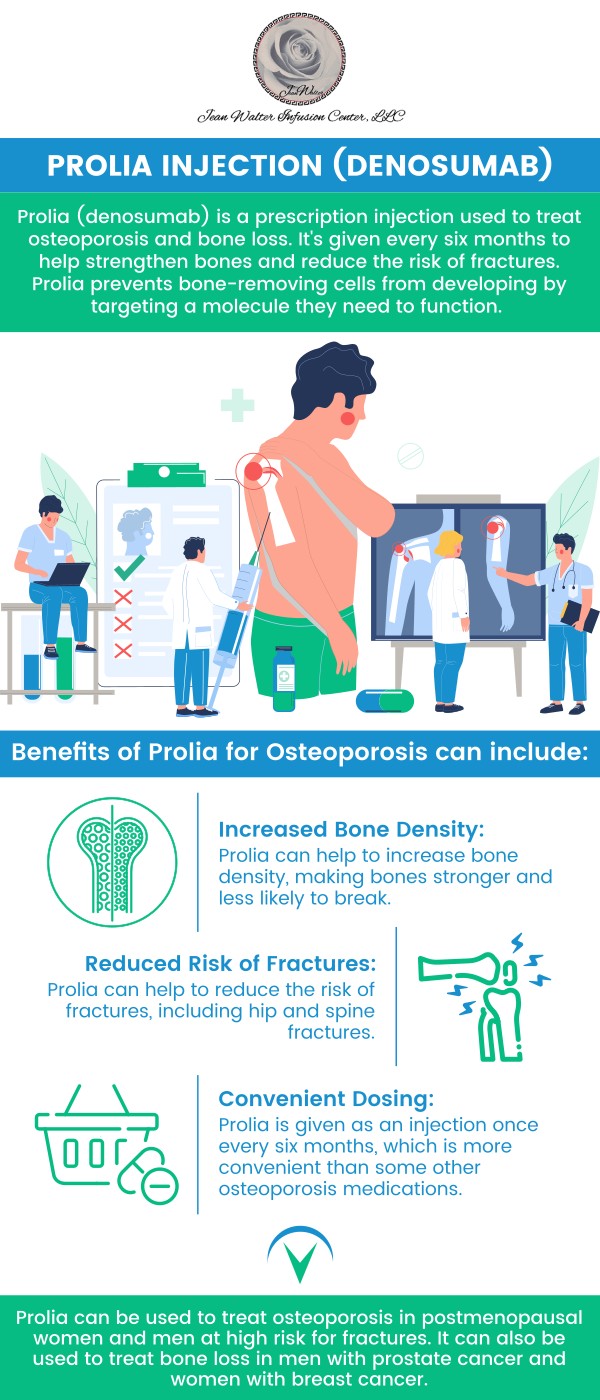
Table of Contents:
What happens in the body after the first Prolia injection?
Does Prolia begin affecting bone breakdown before patients notice measurable changes?
Does the response to the first Prolia injection vary between patients?
Why is consistent treatment important even when patients cannot feel Prolia working?
How does Jean Walter Infusion Center monitor treatment response after a patient’s first Prolia injection in Rosedale, MD?
Understanding what happens in your body after your first Prolia injection can help you feel more confident and informed about your treatment.
How Prolia Works in Your Body
After your first injection of Prolia, which is safely administered by our experienced infusion team, a series of beneficial changes begin to occur within your bones. Prolia is a monoclonal antibody that targets and blocks a protein called RANK ligand. This protein is crucial for the formation and activity of osteoclasts—the cells responsible for breaking down bone. By inhibiting RANK ligand, Prolia reduces the activity of osteoclasts, which helps decrease bone breakdown (resorption).
What to Expect After Your Injection
Following your injection, denosumab is absorbed into your bloodstream and starts working within hours to days. It binds to RANK ligand, effectively slowing down bone resorption. Over the next several weeks, this allows your bone-building cells, known as osteoblasts, to work more efficiently, increasing your bone mineral density and helping to strengthen your bones.
Although you may not feel these changes immediately, laboratory tests often show a reduction in bone turnover markers within a few weeks. Over time, with ongoing treatment, patients typically experience a significant reduction in fracture risk and improvement in bone strength.
Prolia is an effective medication that works by inhibiting the activity of osteoclasts—the cells responsible for breaking down bone. Once administered as an injection in our comfortable, patient-focused infusion center, Prolia begins working at the cellular level within days.
Although patients may not immediately notice physical changes after their injection, research shows that Prolia starts to significantly reduce bone breakdown markers in the blood just days to weeks after treatment. This means that even before changes show up on bone density scans, Prolia is actively working to protect your bones and slow bone loss.
Prolia is commonly prescribed to help increase bone density and reduce the risk of fractures, but it’s important to know that each patient’s response to the first injection can vary.
What to Expect: When you receive your first Prolia injection
Our experienced infusion team will monitor you closely. Most patients experience only mild or no noticeable side effects, such as back pain, muscle pain, or joint discomfort. Some may notice temporary redness or swelling at the injection site. Rarely, more serious reactions like low blood calcium (hypocalcemia), infections, or allergic responses can occur—especially if you have certain underlying medical conditions or risk factors.
• Personalized Monitoring and Support: Our team evaluates factors like your medical history, kidney function, age, and any medications you’re currently taking to help anticipate and minimize potential side effects. We will review your symptoms, answer all your questions, and provide ongoing support during and after your visit. If you experience any unusual symptoms following your injection, we encourage you to contact us promptly so that we can address your concerns and adjust your care as needed.
• Your Health, Our Priority: At Jean Walter Infusion Center, we understand that each patient is unique. Our commitment to individualized care means we are here to help manage your osteoporosis therapy safely and successfully.
Unlike some medications that provide quick relief, Prolia works over time to strengthen your bones and reduce your risk of fractures.
It’s important to remember that not feeling any different after your injection doesn’t mean the medication isn’t working. If you delay or miss a dose, your risk of bone loss and fractures can increase again, undoing the protection Prolia provides. That’s why our team at Jean Walter Infusion Center encourages you to keep all your scheduled appointments for Prolia injections.
By following your treatment plan and coming in for your regular injections, you’re taking an important step to safeguard your bone health—even if the benefits aren’t immediately noticeable.
At Jean Walter Infusion Center, Dr. Nasser Nasseri, MD, and our clinical team provide individualized monitoring for patients receiving Prolia injections as part of osteoporosis management.
Following the first Prolia injection, Dr. Nasseri and our team monitor how the patient responds to treatment and discuss any new symptoms or potential side effects. Depending on individual health factors, follow-up laboratory testing may be recommended to assess calcium and other relevant levels. Patients are encouraged to communicate changes such as muscle cramps, tingling, numbness, or unusual discomfort so that concerns can be evaluated appropriately.
Monitoring also extends beyond the period immediately following the injection. Dr. Nasser Nasseri, MD, considers each patient’s overall bone health, treatment response, and relevant test results when guiding ongoing care. Bone density testing may be used at appropriate intervals to evaluate changes over time and help determine how well the treatment plan is supporting bone density management.
Our team also provides education about maintaining appropriate calcium and vitamin D intake based on medical guidance and emphasizes the importance of keeping Prolia injections on the prescribed schedule. Because Prolia is generally administered every six months, consistent follow-up is an important part of ongoing treatment.
At Jean Walter Infusion Center, Dr. Nasseri and our team combine individualized monitoring, patient education, and coordinated follow-up to support patients throughout Prolia therapy. Our goal is to provide attentive and well-managed osteoporosis care for patients receiving Prolia injections in Rosedale, MD. For more information, contact us today or book an appointment online now! We are conveniently located at 9114 Philadelphia Rd, Suite 208A, Rosedale, MD 21237. We serve patients from Rosedale MD, Parkville MD, Middle River MD, Rossville MD, Overlea MD, and surrounding areas.
Check Out Our 5 Star Reviews

Additional Services We Offer


- Infusion Therapy
- Injection Treatments
- Intravenous Immunoglobulin Therapy
- Medical Conditions
- Asthma
- Crohn’s Disease
- Fibromyalgia
- Gout
- Inflammatory Eye Disease
- Inflammatory Skin Disease
- Iron Deficiency
- Lupus
- Multiple Sclerosis
- Myositis
- Osteoporosis
- Rheumatoid Arthritis
- Ulcerative Colitis
- Vasculitis
- IVIG Infusions
- Platelet-Rich Plasma (PRP)


 Send Text
 How May I Help You?