

Prolia Injection Specialist in Edgewater, MD: A Treatment Option for Osteoporosis Support
At Jean Walter Infusion Center in Edgewater, MD, Dr. Nasser Nasseri, MD, and our experienced team provide personalized Prolia injections for patients managing osteoporosis and reduced bone density. Prolia is designed to help slow bone loss and support stronger bones in appropriate patients. Our dedicated professional team provides individualized oversight and ongoing monitoring to support safe, well-coordinated osteoporosis care. For more information, contact us or request an appointment online. We are conveniently located at 3168 Braverton St., Suite 330A, Edgewater, MD 21037.
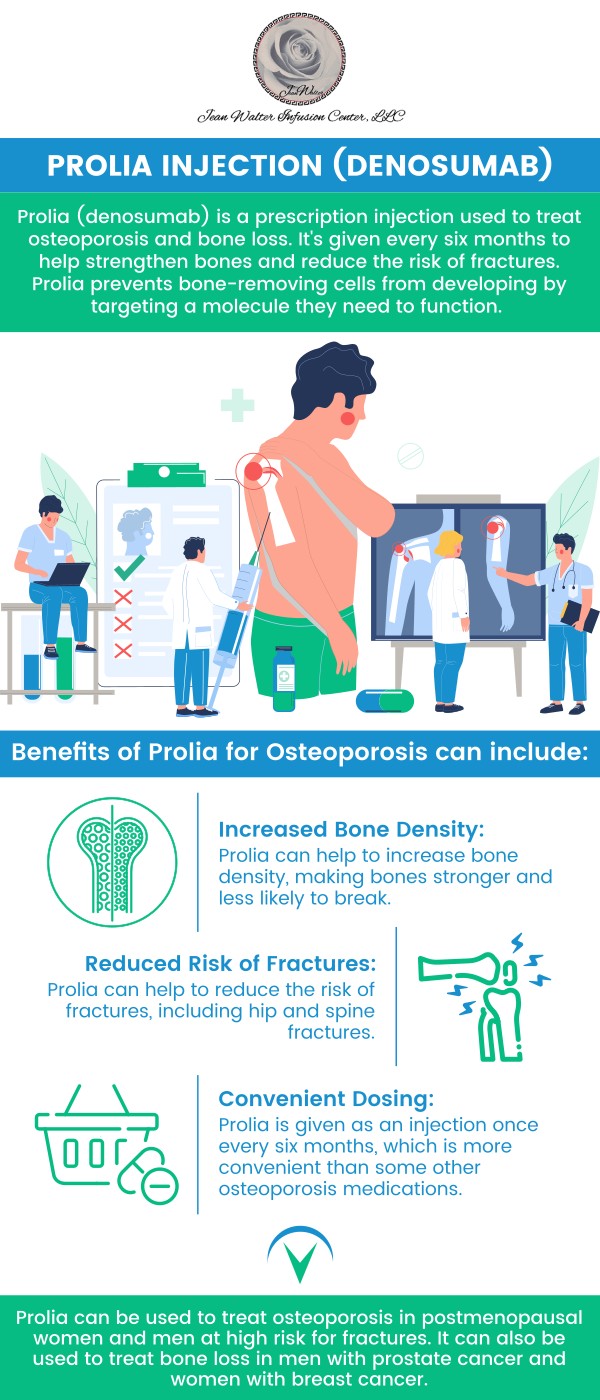
Table of Contents:
What is a Prolia injection, and how does it help treat postmenopausal osteoporosis?
Who is a suitable candidate for Prolia injections for bone loss prevention?
How is a Prolia injection administered, and why is it given once every six months?
What routine health screenings and calcium level checks are required before receiving a Prolia injection?
Why choose Dr. Nasser Nasseri, MD, for personalized Prolia injections at Jean Walter Infusion Center in Edgewater, MD?
Prolia (denosumab) is a prescription medication used to treat osteoporosis in postmenopausal women who are at high risk for bone fractures. As a monoclonal antibody, denosumab works by targeting a specific protein in the body called RANK ligand, which plays a key role in breaking down bone tissue. By inhibiting this protein, Prolia helps reduce bone loss and increase bone strength.
For postmenopausal women, decreased estrogen levels can lead to rapid bone loss and increased risk for fractures. At Jean Walter Infusion Center, our experienced healthcare providers administer Prolia as a convenient injection under the skin, typically once every six months.
Our team is committed to providing comprehensive care, including monitoring your bone health with regular follow-up visits and coordinating necessary lab work. We also provide guidance on maintaining adequate calcium and vitamin D intake to support your treatment and overall bone health.
Suitable candidates for Prolia are often individuals who have not tolerated, or have not responded adequately to, other osteoporosis therapies. Jean Walter Infusion Center commonly administers Prolia to postmenopausal women with osteoporosis, men at high risk for osteoporotic fractures, and patients undergoing treatments—like hormone deprivation therapy for certain cancers—that can accelerate bone loss.
If you have experienced side effects or have contraindications to other osteoporosis medications, Prolia may be an alternative worth considering.
Our team will work closely with you and your referring physician to determine if Prolia is an appropriate option based on your overall health, fracture risk, and previous treatments. All decisions regarding osteoporosis management are made collaboratively to ensure your safety and the best possible outcomes.
Prolia (denosumab) is administered as a subcutaneous injection, which means it is injected just under the skin. Our experienced healthcare professionals ensure that each injection is performed safely and comfortably, typically in the upper arm, upper thigh, or abdomen.
Prolia is given once every six months. This convenient dosing schedule helps maintain steady medication levels in your body and provides continuous protection against bone loss. Prolia works by inhibiting a protein involved in bone resorption, which helps slow down the process that leads to osteoporosis and reduces the risk of fractures.
When you receive your Prolia injection at Jean Walter Infusion Center, you benefit from expert care in a supportive clinical environment. Our team monitors for any immediate reactions and provides personalized attention to ensure your safety and comfort throughout the process. Regular six-month appointments also help improve adherence to your treatment plan, making it easier to maintain your bone health.
If you are scheduled to receive a Prolia (denosumab) injection with us, it’s important to complete several routine health screenings and laboratory checks before your appointment. These evaluations help us ensure that Prolia is safe and appropriate for you.
• Blood Calcium Level Screening
Prolia can lower your blood calcium, so one of the first steps our team will take is to check your serum calcium level. This simple blood test ensures your calcium is within a healthy range. If your calcium is low, we will work with you and your referring provider to correct this before proceeding with your injection. This precaution helps prevent serious complications related to low calcium.
• Kidney Function Testing
Your kidney health is closely linked to your body’s ability to regulate calcium. At Jean Walter Infusion Center, we routinely check your kidney function—typically through blood tests for creatinine and your estimated glomerular filtration rate (eGFR). If you have a history of kidney disease or decreased kidney function, you may be at higher risk of low calcium after receiving Prolia.
• Vitamin D Status Evaluation
Adequate vitamin D levels are essential for calcium absorption and bone health. Before your Prolia injection, we may recommend a vitamin D test to make sure your levels are sufficient. If you need supplementation, we’ll provide guidance based on your results.
• Comprehensive Medical Review
Our clinical staff will review your medical history, including any previous issues with low calcium (hypocalcemia), vitamin D deficiency, or disorders affecting bone metabolism.
Why These Steps Matter
By completing these routine screenings—calcium, kidney function, vitamin D, and a medical history review—we minimize the chance of adverse effects and ensure Prolia is a safe, effective option for you.
At Jean Walter Infusion Center in Edgewater, MD, Dr. Nasser Nasseri, MD, and our experienced clinical team provide personalized Prolia injections for patients who have been prescribed treatment for osteoporosis and bone density management. Dr. Nasseri takes an individualized approach, considering each patient’s medical history, bone health needs, and treatment goals when overseeing their care.
Before and throughout Prolia therapy, Dr. Nasser Nasseri, MD, and our team review relevant health information and monitor each patient’s response to treatment. Appropriate follow-up and testing may also be coordinated as part of the patient’s ongoing bone health plan. This personalized approach allows questions or concerns to be addressed throughout treatment rather than limiting care to the injection itself.
Dr. Nasseri and our team explain how Prolia fits into the patient’s treatment plan, what to expect during the injection, potential side effects, and the importance of following the recommended treatment schedule. Patients are encouraged to ask questions so they can feel informed and comfortable with their care.
Our team also focuses on making each appointment organized, comfortable, and convenient. Because Prolia is generally administered every six months, we help patients stay on track with their scheduled injections and provide guidance regarding appropriate follow-up care.
At Jean Walter Infusion Center, Dr. Nasser Nasseri, MD, combines individualized attention with ongoing clinical support to help patients navigate Prolia treatment with confidence. Our goal is to provide coordinated, compassionate bone health care for patients receiving Prolia injections in Edgewater, MD. For more information, contact us or request an appointment online. We are conveniently located at 3168 Braverton St., Suite 330A, Edgewater, MD 21037. We serve patients from Edgewater MD, Riva MD, Davidsonville MD, Annapolis MD, and surrounding areas.
Check Out Our 5 Star Reviews

Additional Services We Offer


- Infusion Therapy
- Injection Treatments
- Intravenous Immunoglobulin Therapy
- Medical Conditions
- Asthma
- Crohn’s Disease
- Fibromyalgia
- Gout
- Inflammatory Eye Disease
- Inflammatory Skin Disease
- Iron Deficiency
- Lupus
- Multiple Sclerosis
- Myositis
- Osteoporosis
- Rheumatoid Arthritis
- Ulcerative Colitis
- Vasculitis
- IVIG Infusions
- Platelet-Rich Plasma (PRP)


 Send Text
 How May I Help You?