

What Should I Expect from Osteoporosis Treatment in Rosedale, MD
At Jean Walter Infusion Center, patients seeking osteoporosis treatment in Rosedale, MD, receive a sophisticated level of care led by Dr. Nasser Nasseri, MD. Our clinic focuses on advanced bone density management and infusion therapies aimed at enhancing the strength of the skeletal system, prevent debilitating fractures, and provide a roadmap for long-term mobility. For more information, contact us today or book an appointment online now! We are conveniently located at 9114 Philadelphia Rd, Suite 208A, Rosedale, MD 21237.
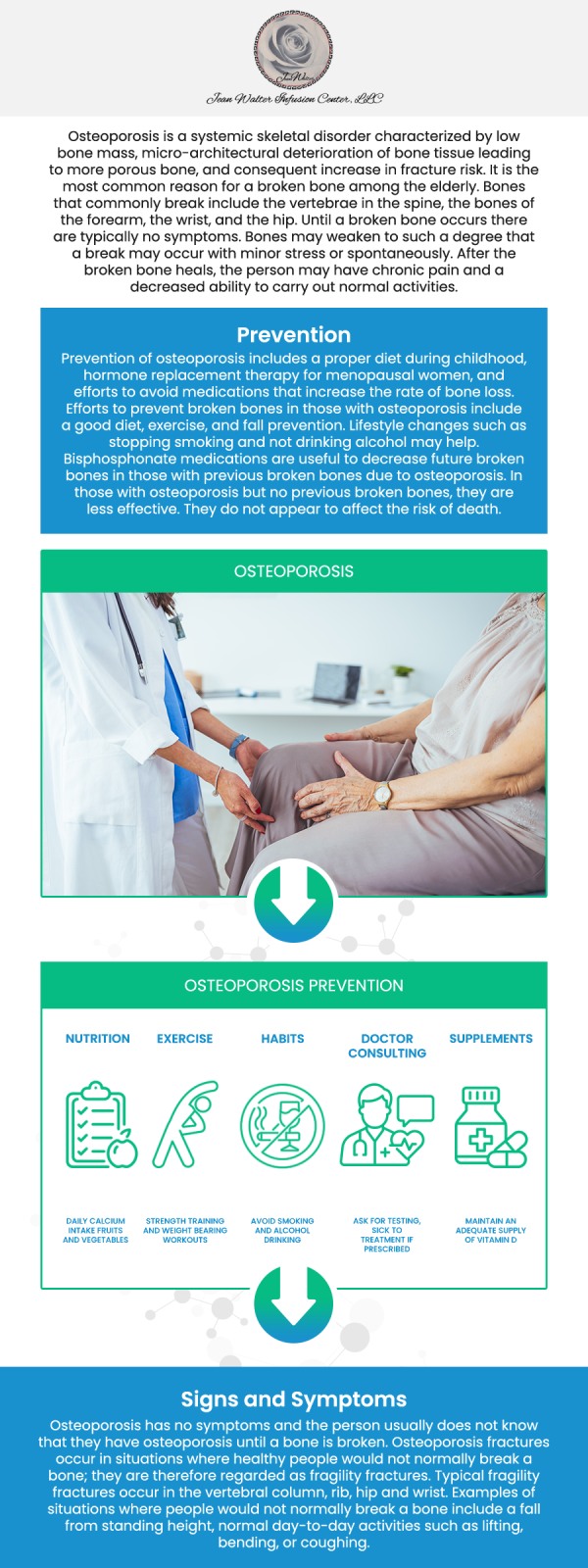
Table of Contents:
How is osteoporosis diagnosed, and what tests are involved?
What treatment options are available for managing osteoporosis?
What should I expect during my first visit for osteoporosis treatment?
How long does it take to see results from osteoporosis treatment, and what follow-up care is necessary?
Expect Personalized Osteoporosis Care with Dr. Nasser Nasseri, MD at Jean Walter Infusion Center
Osteoporosis is often called a “silent disease” because bone loss happens slowly and without noticeable symptoms. Therefore, proactive diagnostic testing is the cornerstone of effective management. At Jean Walter Infusion Center, we utilize a combination of imaging and laboratory assessments to create a complete picture of your skeletal health.
The primary diagnostic tool is the Dual-Energy X-ray Absorptiometry (DEXA) scan. This is a quick, painless, and non-invasive imaging test that measures bone mineral density (BMD) at the hip and spine—the areas most susceptible to fractures. The scan generates a “T-score,” which compares your bone density to that of a healthy young adult. A T-score of -2.5 or lower indicates osteoporosis, while a score between -1.0 and -2.5 suggests osteopenia (low bone mass).
In addition to the DEXA scan, Dr. Nasser Nasseri, MD may order:
• FRAX Tool Assessment: A specialized algorithm that calculates your 10-year probability of suffering a major osteoporotic fracture based on clinical risk factors like age, smoking status, and family history.
• Blood and Urine Tests: These are used to identify “secondary osteoporosis” caused by other underlying conditions. We check for Vitamin D deficiencies, calcium imbalances, thyroid or parathyroid issues, and markers of bone turnover to see how fast your body is breaking down bone.
• Physical Evaluation: Checking for height loss or changes in posture, which can indicate undiagnosed vertebral compression fractures.
Modern medicine has moved far beyond simple calcium supplements. At Jean Walter Infusion Center, we offer a spectrum of pharmaceutical and lifestyle interventions tailored to your specific bone density profile.
Antiresorptive Medications
These are designed to slow down the “resorption” process—the phase where the body breaks down old bone. By slowing this process, the body can better maintain its current bone mass.
• IV Bisphosphonates: For patients who cannot tolerate oral pills or prefer a more convenient schedule, we offer intravenous infusions like Reclast (Zoledronic Acid). These are typically administered just once a year.
• Biologics: Prolia (Denosumab) is a highly effective injection given every six months. It targets the specific protein that triggers bone-destroying cells, providing consistent protection for the skeleton.
Anabolic (Bone-Building) Agents
For patients with severe osteoporosis or those who have already experienced a fracture, Dr. Nasser Nasseri, MD may recommend “anabolic” therapies. Unlike other drugs that just stop bone loss, these medications, such as Evenity, Forteo, or Tymlos, actively stimulate the body to build new, high-quality bone tissue.
Nutritional and Physical Support
No medication works in a vacuum. We provide detailed guidance on optimizing your intake of Calcium and Vitamin D3 and recommend specific weight-bearing and resistance exercises that naturally signal the body to strengthen the bones.
Your initial visit is a comprehensive consultation aimed at understanding your unique risk profile. We begin with an in-depth review of your medical history. We will discuss any past fractures, your dietary habits, and any long-term medications you may be taking—such as corticosteroids—which are known to thin the bones over time.
During this visit, we will review your DEXA scan results in detail. If you haven’t had a recent scan, we will coordinate the imaging for you. We also take the time to explain the science behind bone loss so you feel empowered in your treatment decisions.
The first visit is also where we discuss the logistics of infusion therapy. Our clinical team will walk you through the process of receiving an IV treatment, including how long the session takes (usually under 30 minutes) and the importance of staying hydrated before and after the procedure. Our goal is to ensure that by the time you leave, you have a clear, personalized treatment plan and feel confident in the steps ahead.
Bone health is a long-term commitment. Unlike a fever that breaks in a few days, bone tissue regenerates slowly, meaning results are measured in months and years rather than days.
• The Timeline: While medications begin working at the cellular level within weeks, it usually takes 12 to 24 months to see a measurable increase in bone density on a DEXA scan. However, the protection against fractures begins much sooner, as the medications improve the “quality” and mineralization of the existing bone.
• Follow-up DEXA Scans: We typically schedule repeat bone density scans every one to two years to monitor your progress and ensure the chosen therapy is effectively increasing or stabilizing your bone mass.
• Routine Lab Work: For patients on infusion therapies, we perform periodic blood tests to monitor calcium levels and kidney function. This ensures the treatment is both safe and effective for your specific biology.
• Long-term Management: Osteoporosis is a chronic condition that requires ongoing vigilance. Regular check-ins allow us to adjust your treatment as you age or as your lifestyle changes, ensuring you remain protected against fractures throughout your life.
Dr. Nasser Nasseri, MD is a specialist known for his expertise in rheumatology and metabolic bone disorders. At Jean Walter Infusion Center, he offers a high-level, personalized approach to care that focuses on the unique needs of each patient. Dr. Nasseri understands that every patient has a different lifestyle and risk tolerance; therefore, he focuses on crafting bespoke treatment plans that utilize the latest in medical technology, including advanced IV infusions and bone-building biologics. Our center is dedicated to creating a comfortable environment where you are treated with dignity and clinical precision. Under Dr. Nasseri’s guidance, you can expect a proactive approach to bone health that focuses on maintaining your independence and strength for years to come.
Don’t leave your bone health to chance. If you have a family history of bone loss or are concerned about your fracture risk, visit Jean Walter Infusion Center for professional osteoporosis treatment and let us help you build a stronger foundation for your future. For more information, contact us today or book an appointment online now! We are conveniently located at 9114 Philadelphia Rd, Suite 208A, Rosedale, MD 21237. We serve patients from Rosedale MD, Parkville MD, Middle River MD, Rossville MD, Overlea MD, and surrounding areas.
Check Out Our 5 Star Reviews

Additional Services We Offer


- Infusion Therapy
- Injection Treatments
- Intravenous Immunoglobulin Therapy
- Medical Conditions
- Asthma
- Crohn’s Disease
- Fibromyalgia
- Gout
- Inflammatory Eye Disease
- Inflammatory Skin Disease
- Iron Deficiency
- Lupus
- Multiple Sclerosis
- Myositis
- Osteoporosis
- Rheumatoid Arthritis
- Ulcerative Colitis
- Vasculitis
- IVIG Infusions
- Platelet-Rich Plasma (PRP)


 Send Text
 How May I Help You?