

How Long Does It Take for Prolia to Improve Bone Density in Columbia, MD?
Changes in bone density from Prolia are typically evaluated over time rather than immediately after an injection. Dr. Nasser Nasseri, MD, works with patients to follow their bone health through appropriate monitoring and follow-up assessments, helping determine how they are responding to therapy. At Jean Walter Infusion Center, our team focuses on keeping patients informed throughout Prolia treatment, including the importance of maintaining the recommended injection schedule. For more information, contact us or book an appointment online. We are conveniently located at 5500 Knoll North Dr, Suite 250A, Columbia, MD 21045.
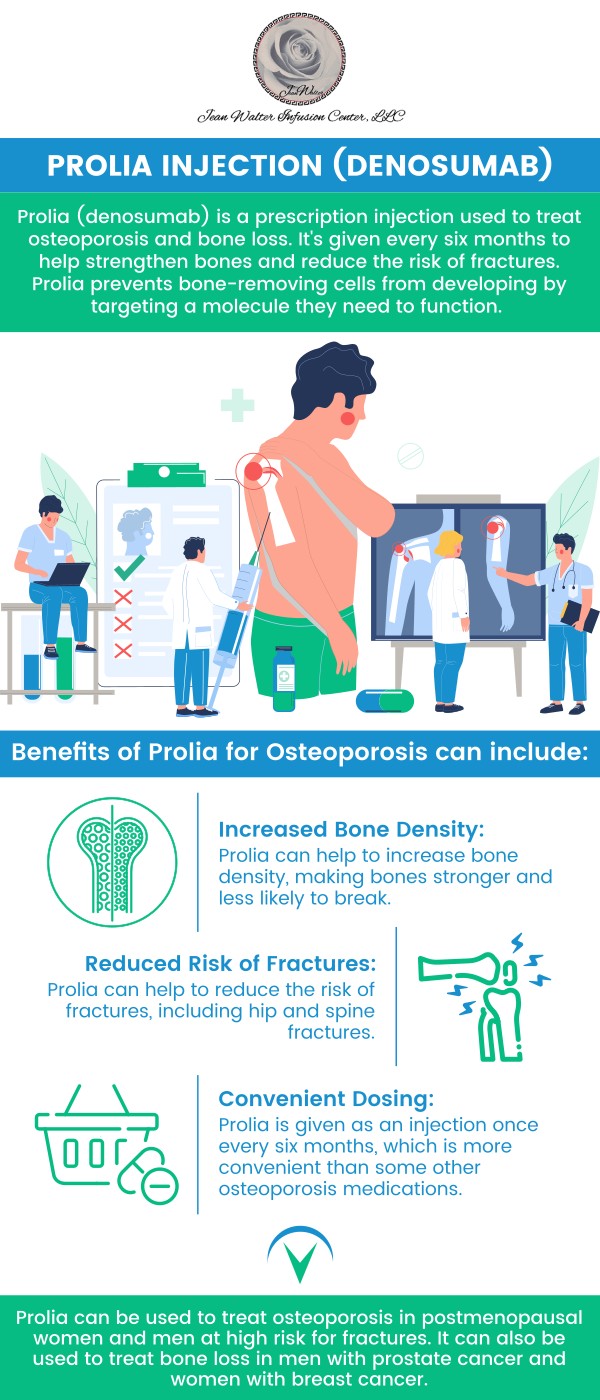
Table of Contents:
How quickly can patients expect to see changes in bone density after starting Prolia treatment?
What factors can influence how long Prolia takes to improve bone strength?
How often are bone density levels monitored during Prolia treatment?
Can Prolia provide continued bone density improvements with long-term use?
How does Dr. Nasser Nasseri, MD help patients track Prolia progress at Jean Walter Infusion Center?
If you are beginning Prolia (denosumab) therapy at Jean Walter Infusion Center, you may be curious about how soon you’ll notice changes in your bone density. Research shows that improvements in bone mineral density are often seen within the first six months of treatment. The most pronounced increases tend to occur in the lumbar spine and hip—areas we routinely monitor throughout your osteoporosis therapy.
With continued Prolia treatment at Jean Walter Infusion Center for twelve months and beyond, patients generally experience progressively greater gains in bone density. It’s important to remember, however, that you likely won’t feel these changes physically. Increases in bone density are detected through follow-up bone mineral density (BMD) scans, not through symptoms.
Our team will work closely with you, scheduling regular BMD testing and check-ins to carefully monitor your progress and ensure your treatment is as effective as possible.
Several important factors can influence your response to Prolia, and our team is dedicated to supporting you throughout your treatment journey.
One key factor is your baseline bone density prior to starting Prolia. Patients with more severe bone loss may take longer to notice significant improvements. Age also plays a role—older adults may experience slower bone remodeling than younger individuals.
Adhering to your Prolia dosing schedule is crucial. At Jean Walter Infusion Center, Prolia is administered as a convenient injection once every six months. Consistent, on-time appointments help ensure you receive the full benefit of your therapy.
Underlying health conditions—such as chronic kidney disease, hormonal imbalances, or malabsorption syndromes—can affect bone metabolism and influence your response to treatment. Our medical team will review your medical history and work closely with your other healthcare providers to optimize your care.
Lifestyle choices are also important. For best results, we recommend maintaining a balanced diet. These habits support bone health and complement the effects of Prolia.
Additionally, certain medications—such as corticosteroids or other treatments that impact bone turnover—can influence how quickly you see improvements. Be sure to inform your care team about all the medications and supplements you are taking.
Because of these variables, the time to see significant changes in bone density and strength with Prolia can vary from person to person. Most clinical studies show measurable improvements within six to twelve months of starting therapy, but optimal bone strength might take longer to achieve, depending on your unique circumstances.
At Jean Walter Infusion Center, we prioritize comprehensive care for patients receiving Prolia (denosumab) therapy to manage osteoporosis and related bone health conditions. However, the exact frequency may be adjusted based on your individual risk factors, response to therapy, and the recommendations of our experienced medical team.
Bone mineral density (BMD) testing, most often performed using a DEXA scan, enables us to assess how well your Prolia treatment is working and whether any changes to your therapy are necessary. For patients at higher risk for rapid bone loss or if there are concerns about treatment effectiveness, we may recommend more frequent monitoring.
In addition to bone density checks, regular follow-up appointments at Jean Walter Infusion Center are essential. During these visits, we evaluate your calcium levels, kidney function, and discuss any side effects or concerns you may have. This comprehensive approach ensures your safety and helps optimize your treatment outcomes.
Prolia is a proven medication, especially beneficial for postmenopausal women and others at increased risk of fractures, that works by inhibiting the activity of osteoclasts—the cells responsible for breaking down bone. By doing so, Prolia helps reduce bone loss and increases bone mineral density (BMD).
It’s important to receive Prolia as scheduled, typically once every six months, because discontinuing the medication can lead to rapid bone loss and an increased risk of fractures. At Jean Walter Infusion Center, our experienced team will help you stay on track with your therapy, providing reminders, follow-up care, and support at every visit.
Your Partner in Osteoporosis Management
We believe in a personalized approach to care. Our infusion specialists and clinical team will regularly monitor your bone health, coordinate with your referring physician, and ensure your treatment plan is optimized for the best possible outcomes.
At Jean Walter Infusion Center, Dr. Nasser Nasseri, MD, is dedicated to providing personalized, comprehensive care for patients undergoing Prolia (denosumab) therapy. Prolia is an advanced medication designed to treat osteoporosis and improve bone health, and successful outcomes rely on expert monitoring and support throughout the treatment journey.
Dr. Nasseri and the skilled infusion center team begin by thoroughly educating each patient about Prolia, explaining how it works, its benefits, and what side effects to watch for. Before starting therapy, Dr. Nasseri carefully reviews each patient’s medical history, assesses their bone density, and evaluates individual risk factors.
Treatment at Jean Walter Infusion Center is seamlessly coordinated for patient convenience and safety. Prolia injections are administered in a professional, comfortable environment by experienced staff. Dr. Nasseri schedules regular follow-up appointments at the infusion center to closely monitor patient progress. During these visits, he assesses bone health, reviews symptoms, and discusses any changes in physical well-being. Routine bone mineral density (DEXA) scans and laboratory tests—including calcium levels and kidney function—are ordered as needed to confirm that therapy remains both safe and effective.
The Jean Walter Infusion Center team, under Dr. Nasseri’s leadership, maintains detailed records of each Prolia injection, ensuring patients stay on schedule and receive timely care—an essential factor in achieving optimal results. Patients also benefit from open communication and ongoing education; Dr. Nasseri addresses any concerns, manages potential side effects, and develops personalized strategies to support medication adherence.
By combining medical expertise, advanced monitoring technology, and a compassionate, patient-centered approach, Dr. Nasseri help patients achieve the best possible outcomes with Prolia therapy—empowering them to take control of their bone health with confidence. For more information, contact us or book an appointment online. We are conveniently located at 5500 Knoll North Dr, Suite 250A, Columbia, MD 21045. We serve patients from Columbia, MD, Ellicott City MD, Laurel MD, Clarksville MD, Fulton MD, and surrounding areas.
Check Out Our 5 Star Reviews

Additional Services We Offer


- Infusion Therapy
- Injection Treatments
- Intravenous Immunoglobulin Therapy
- Medical Conditions
- Asthma
- Crohn’s Disease
- Fibromyalgia
- Gout
- Inflammatory Eye Disease
- Inflammatory Skin Disease
- Iron Deficiency
- Lupus
- Multiple Sclerosis
- Myositis
- Osteoporosis
- Rheumatoid Arthritis
- Ulcerative Colitis
- Vasculitis
- IVIG Infusions
- Platelet-Rich Plasma (PRP)


 Send Text
 How May I Help You?