

Is Osteoporosis Genetic? A Guide to Risk Factors and Screening in Rosedale, MD
Is osteoporosis genetic? Dr. Nasseri, MD, explains the role genetics play in bone health and outlines other risk factors such as age, gender, and lifestyle. This guide provides valuable information on screening and preventative measures to manage osteoporosis risk in Rosedale, MD. For more information, contact us today or book an appointment online now! We are conveniently located at 9114 Philadelphia Rd, Suite 208A, Rosedale, MD 21237.
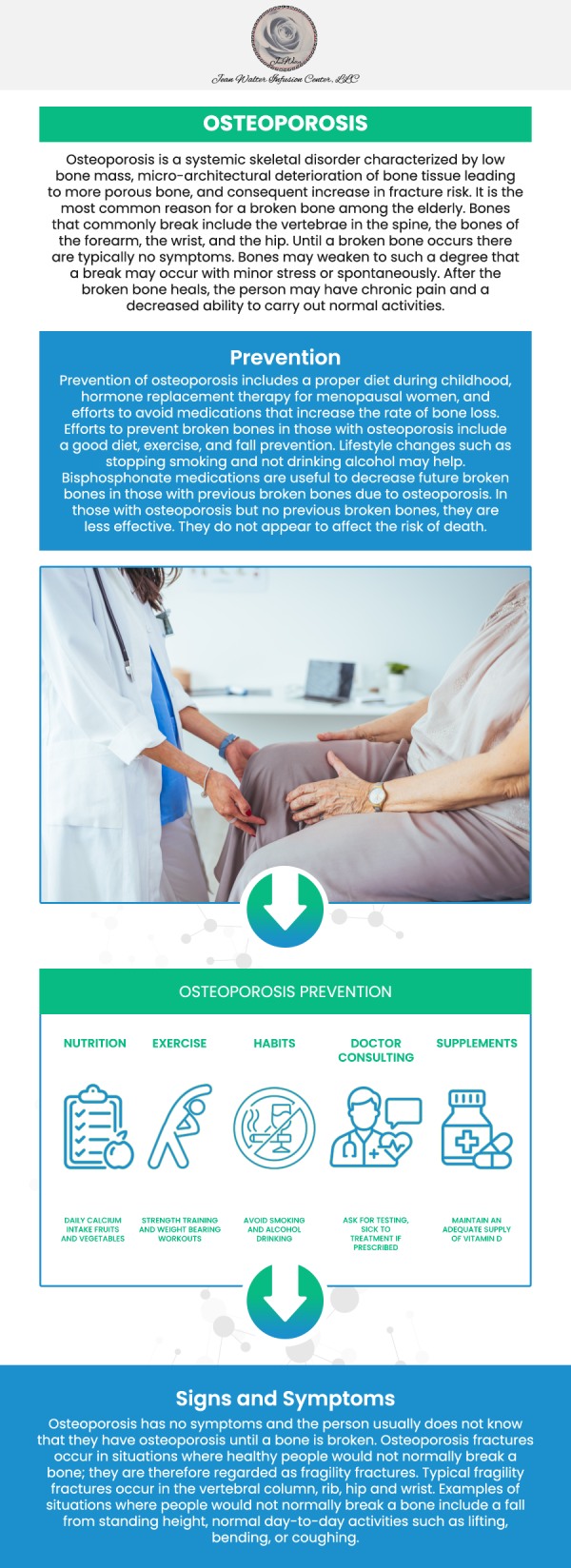
Table of Contents:
How does genetics influence the risk of developing osteoporosis?
What are the key risk factors for osteoporosis that are not related to genetics?
At what age should I start screening if osteoporosis “runs in the family”?
Can lifestyle changes like strength training mitigate my genetic risk for osteoporosis?
Does Your Heritage Impact Your Care at Jean Walter Infusion Center?
At Jean Walter Infusion Center, we understand that osteoporosis is a complex condition influenced by many factors—including genetics. Osteoporosis, which leads to weakened bones and a higher risk of fractures, is not only shaped by lifestyle and medical history, but also by your genetic makeup.
How Genetics Impacts Bone Health
Research shows that genetic variations can significantly affect bone mineral density, bone size, and bone strength. Certain genes control the production of proteins like collagen, crucial for bone structure, and influence how your body metabolizes calcium and vitamin D—both essential for healthy bones. If you have inherited genes that limit your body’s ability to build or maintain strong bones, you may be at a higher risk for developing osteoporosis, regardless of how well you eat or how active you are.
A family history of osteoporosis or fractures is also a strong indicator of increased risk. In fact, up to 80% of the difference in bone density among people is due to genetics. Knowing your family history can help you and your healthcare provider take proactive steps to protect your bone health.
If you are at risk for osteoporosis due to genetic factors, early intervention is key. We offer advanced infusion therapies, such as bisphosphonates and other bone-strengthening medications, which can help reduce bone loss and decrease the risk of fractures.
We also provide education on lifestyle modifications, nutrition, and the importance of regular screenings—especially if you have a family history of osteoporosis. For some patients, genetic counseling or testing may be recommended to better understand individual risk and guide personalized care.
Osteoporosis is influenced by a range of risk factors beyond genetics, and at Jean Walter Infusion Center, we are committed to helping patients manage and reduce these risks through comprehensive care and advanced therapies. One of the most significant non-genetic contributors is advancing age, as bone density naturally decreases over time. Hormonal changes, particularly in women after menopause due to decreased estrogen, can lead to accelerated bone loss, increasing the need for proactive monitoring and intervention.
Lifestyle factors also play a crucial role. Insufficient calcium and vitamin D intake—whether from diet or lack of sunlight—can impair bone health. Physical inactivity reduces the mechanical stimulation needed to maintain strong bones, while excessive alcohol consumption and smoking can further decrease bone density. Our team educates patients on lifestyle modifications and works closely with them to ensure optimal nutrition and activity levels to support bone health.
Certain medical conditions—such as hyperthyroidism, chronic kidney disease, and gastrointestinal disorders that affect nutrient absorption—can also increase the risk of osteoporosis. The use of specific medications, including long-term corticosteroids, anticonvulsants, and some cancer treatments, can weaken bone structure over time. At our center, we offer specialized infusion therapies, such as intravenous bisphosphonates and other bone-strengthening medications, for patients who require advanced management due to these underlying conditions or medication side effects.
Additionally, individuals with low body weight or a small body frame are at higher risk because they have less bone mass to draw upon as they age. Recognizing these risk factors allows the Jean Walter Infusion Center to provide personalized osteoporosis care, including diagnostic evaluations, targeted infusion treatments, and ongoing monitoring.
At Jean Walter Infusion Center, we recognize that a family history of osteoporosis—such as having a parent or sibling diagnosed with the condition or who has suffered a fragility fracture—can significantly increase your own risk of developing osteoporosis. Early identification and management are essential for maintaining bone health and preventing complications.
For most women, osteoporosis screening with a bone mineral density (DEXA) scan is recommended starting at age 65, and for men at age 70, provided there are no additional risk factors. However, if you have a family history of osteoporosis, earlier screening is often advised:
• Women with significant risk factors, like a family history, may benefit from screening as early as age 50 or after menopause.
• Men with a family history or other risk factors may consider screening between ages 50 and 60, rather than waiting until 70.
Other risk factors—such as prior fractures, long-term steroid use, or certain medical conditions—may also warrant earlier screening.
Our team is here to help you assess your risk for osteoporosis. We encourage you to share your personal and family medical history with your healthcare provider during your infusion center visits. We can help determine the most appropriate time for you to start bone density screening and discuss strategies for early detection and prevention.
Strength training and weight-bearing exercises are highly recommended because they stimulate bone formation and help maintain or even increase bone density. When you challenge your muscles and bones through resistance training, you encourage your body to strengthen bone tissue, which is especially important if you have a family history or other risk factors for osteoporosis.
Our team works closely with you to create a comprehensive bone health plan. Alongside any necessary medical treatments, we encourage a balanced diet rich in calcium, vitamin D, and other nutrients essential for bone strength. We also offer resources and guidance on healthy lifestyle choices, such as avoiding smoking and excessive alcohol consumption, to further lower your risk.
At Jean Walter Infusion Center, Dr. Nasser Nasseri and his team take a deep dive into your family medical history to create a customized defense against bone loss. Serving the Rosedale community, the center provides a clinical environment where genetic risks are countered with proactive, personalized medical intervention. Whether your risk is hereditary or lifestyle-driven, the center offers cutting-edge treatments like Evenity, Prolia, and Reclast to fortify your skeletal structure. By combining genetic insights with advanced rheumatology, Dr. Nasseri ensures that your family history doesn’t have to dictate your future mobility.
While genetics are a factor, proactive steps like these can significantly improve your bone health and may prevent or delay osteoporosis. If you have concerns about your bone health or would like to discuss infusion therapy options, our specialists at Jean Walter Infusion Center are here to help you develop a personalized treatment and prevention plan tailored to your individual needs. For more information, contact us today or book an appointment online now! We are conveniently located at 9114 Philadelphia Rd, Suite 208A, Rosedale, MD 21237. We serve patients from Rosedale MD, Parkville MD, Middle River MD, Rossville MD, Overlea MD, and surrounding areas.
Check Out Our 5 Star Reviews

Additional Services We Offer


- Infusion Therapy
- Injection Treatments
- Intravenous Immunoglobulin Therapy
- Medical Conditions
- Asthma
- Crohn’s Disease
- Fibromyalgia
- Gout
- Inflammatory Eye Disease
- Inflammatory Skin Disease
- Iron Deficiency
- Lupus
- Multiple Sclerosis
- Myositis
- Osteoporosis
- Rheumatoid Arthritis
- Ulcerative Colitis
- Vasculitis
- IVIG Infusions
- Platelet-Rich Plasma (PRP)


 Send Text
 How May I Help You?