

Understanding IVIG Treatment for Lupus in North Baltimore MD: Benefits and Effectiveness
Intravenous immunoglobulin (IVIG) offers several benefits for lupus patients, especially in severe or treatment-resistant cases. It works by modulating the immune system, blocking harmful autoantibodies, and reducing inflammation, which can alleviate symptoms like pain and organ stress. Visit the competent staff at Jean Walter Infusion Center for lupus treatment. For more information, contact us or book an appointment online. We are conveniently located at 3333 N. Calvert St, Suite 540A, Baltimore, MD 21218.
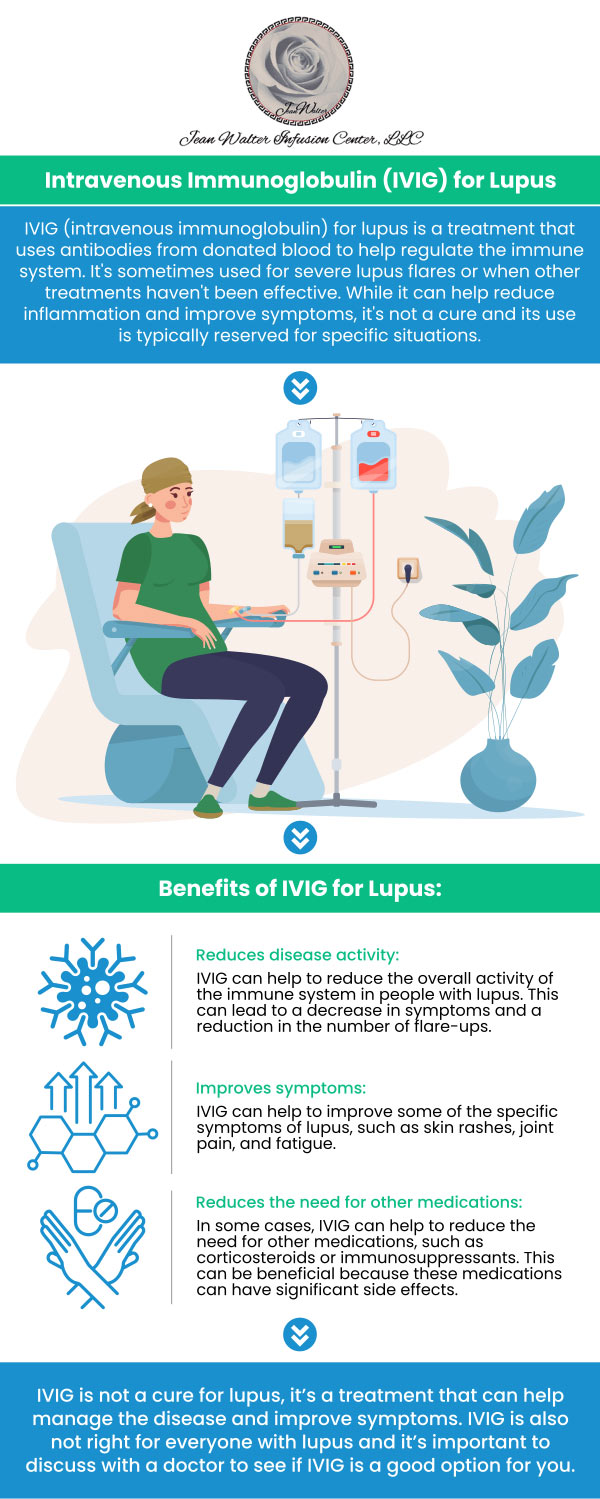
Table of Contents:
What factors determine whether IVIG is an appropriate treatment for lupus patients?
What is the typical duration of IVIG treatment for lupus patients, and how often is it administered?
How does IVIG help in reducing organ damage caused by lupus?
Discover How IVIG Infusion Therapy Can Help Manage Lupus with Dr. Nasser Nasseri, MD
At Jean Walter Infusion Center, our team of experienced healthcare professionals takes a thorough, patient-centered approach to determine whether intravenous immunoglobulin (IVIG) is an appropriate treatment option for individuals living with systemic lupus erythematosus (SLE).
When is IVIG Considered for Lupus?
IVIG is typically not the first line of therapy for lupus; instead, it is reserved for situations where standard treatments—such as corticosteroids or immunosuppressive medications—have not been effective, or when patients are unable to tolerate these medications due to side effects or other medical reasons.
Some of the lupus complications that may lead our specialists to consider IVIG therapy include:
• Severe, treatment-resistant lupus manifestations
• Life-threatening conditions such as severe thrombocytopenia (low platelet count) or autoimmune hemolytic anemia
• Certain neurological complications, such as lupus cerebritis or peripheral neuropathy
• Cases where there is an increased risk of infection, and further immunosuppression could be harmful
Patient Assessment
Before recommending IVIG, our team conducts a comprehensive review of each patient’s overall health and medical history.
Personalized Treatment Planning
The decision to proceed with IVIG is highly individualized. We work closely with patients and their referring physicians to ensure the best possible outcome. We also take into account logistical considerations, such as IVIG availability, insurance coverage, and treatment costs, to make sure therapy is both accessible and sustainable.
Intravenous Immunoglobulin (IVIG) treatment for lupus is generally used for severe, active cases that haven’t responded well to conventional therapies or in situations where other immunosuppressants are contraindicated or have unacceptable side effects. It’s not typically a first-line or long-term solution.
Here’s a breakdown of its typical duration and administration frequency:
Duration:
• Short-term for flares: IVIG is primarily used to manage acute, severe lupus flares. A typical course might involve daily infusions over 3 to 5 consecutive days.
• Cycles for maintenance (less common): In some cases, if there’s a good response and it’s deemed beneficial, patients might receive monthly cycles of IVIG. However, continuous long-term use is uncommon due to its high cost and limited availability. Studies have reported patients receiving anywhere from 1 to 16 cycles, with some receiving monthly infusions for up to 6 months or even 18 months as maintenance therapy in specific situations like lupus nephritis.
• Transient benefit: The beneficial effects of IVIG are often prompt but can be of limited duration, lasting several weeks after the last infusion. Relapses after discontinuing IVIG are not uncommon.
Frequency of Administration:
• Initial treatment: Often administered as a high-dose regimen of 400 mg/kg/day for 5 days, or a total dose of 2 g/kg divided over 2-5 days.
• Maintenance (if applicable): If continued, it’s typically given once a month (e.g., 400 mg/kg/month or 2 g/kg/month over several days).
• Individualized treatment: The exact dosage, frequency, and duration are highly individualized and depend on several factors, including:
• The severity of the lupus and the specific organs affected.
• The patient’s overall health and weight.
• Response to previous treatments.
• The specific IVIG brand and healthcare facility.
It’s crucial to understand that IVIG for lupus is an “off-label” use, meaning it’s not specifically approved by regulatory bodies for this condition, but its use is supported by clinical experience and studies in refractory cases. Close monitoring by a healthcare professional is essential during IVIG therapy to assess effectiveness and manage any potential side effects.
In lupus, the immune system mistakenly targets the body’s own tissues, leading to inflammation and potential damage to organs such as the kidneys, skin, heart, and nervous system. IVIG therapy works to reduce this organ damage through several key mechanisms:
• Immune System Modulation: IVIG provides healthy antibodies that help neutralize or block the harmful autoantibodies responsible for attacking your body’s organs. This helps curb the immune system’s misguided response.
• Inflammation Reduction: IVIG affects the activity of immune cells (B cells and T cells) that drive lupus-related inflammation and tissue damage. By regulating these cells, IVIG decreases the inflammatory processes that can harm your organs.
• Immune Complex Removal: Harmful immune complexes can accumulate in lupus and deposit in organs, causing further inflammation. IVIG contains antibodies that bind to and help remove these complexes from circulation, protecting your organs from ongoing injury.
• Complement System Control: IVIG also blocks certain proteins (complement proteins) in the immune system that are often overactive in lupus and play a role in tissue destruction.
Who May Benefit from IVIG?
IVIG is generally reserved for lupus patients with severe disease or those who have not responded to standard treatments. This includes cases involving lupus-related kidney disease, nervous system involvement, or persistently low blood cell counts where rapid immune suppression is needed.
Dr. Nasser Nasseri, MD, a highly experienced rheumatologist at Jean Walter Infusion Center, specializes in managing complex autoimmune conditions like lupus. One of the most effective therapies he uses for lupus treatment is Intravenous Immunoglobulin (IVIG) Infusion Therapy. IVIG therapy involves administering a concentrated solution of immunoglobulins—antibodies extracted from healthy donors—into the bloodstream. This therapy helps regulate the immune system, reducing inflammation and preventing the immune system from attacking healthy tissues, which is a hallmark of lupus. Dr. Nasseri carefully tailors each treatment to meet the unique needs of his patients, ensuring the therapy targets the underlying immune response that causes lupus flare-ups.
At Jean Walter Infusion Center, IVIG therapy offers significant relief to lupus patients by stabilizing their immune system and improving their quality of life. Dr. Nasseri’s approach combines years of expertise with a compassionate, patient-centered methodology. Whether you’re managing active symptoms or seeking long-term management, Dr. Nasseri’s IVIG treatments are designed to support your journey to wellness. With careful monitoring and personalized care, patients at Jean Walter Infusion Center can expect to experience fewer flare-ups, reduced joint pain, and enhanced overall function. If you or a loved one is struggling with lupus and is interested in learning more about IVIG therapy, visit Jean Walter Infusion Center to see if this treatment is right for you. For more information, contact us or book an appointment online. We are conveniently located at 3333 N. Calvert St, Suite 540A, Baltimore, MD 21218. We serve clients from North Baltimore MD, Dundalk MD, Halethrope MD, Ferndale MD, Yorktown MD, and surrounding areas.
Check Out Our 5 Star Reviews

Additional Services We Offer


- Infusion Therapy
- Injection Treatments
- Intravenous Immunoglobulin Therapy
- Medical Conditions
- Asthma
- Crohn’s Disease
- Fibromyalgia
- Gout
- Inflammatory Eye Disease
- Inflammatory Skin Disease
- Iron Deficiency
- Lupus
- Multiple Sclerosis
- Myositis
- Osteoporosis
- Rheumatoid Arthritis
- Ulcerative Colitis
- Vasculitis
- IVIG Infusions
- Platelet-Rich Plasma (PRP)


 Send Text
 How May I Help You?