

Iron Transfusions: What to Expect in Glen Burnie, MD
Iron transfusions are an effective treatment for individuals with severe iron deficiency. This procedure involves administering iron directly into the bloodstream, helping to quickly restore iron levels and alleviate symptoms like fatigue, weakness, and dizziness. Under the care of Dr. Nasseri, MD, patients can expect a personalized approach, ensuring the right treatment plan for their specific needs. For more information, contact us or book an appointment online. We are conveniently located at 203 Hospital Dr, Suite 300A, Glen Burnie, MD 21061.
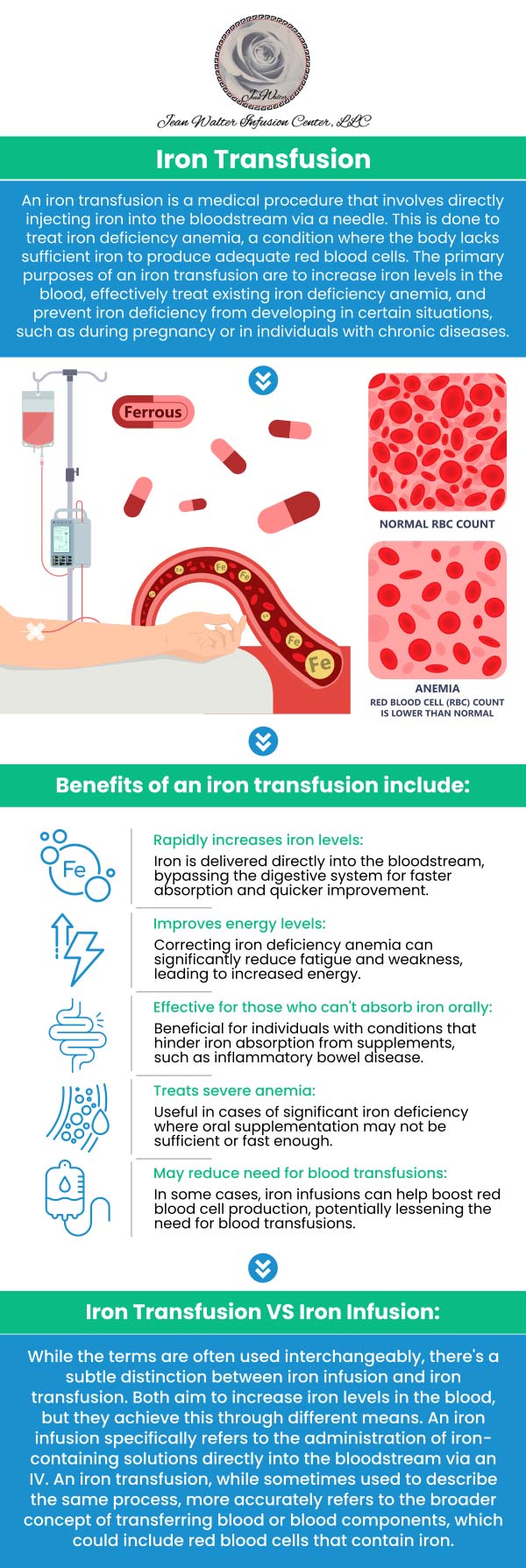
Table of Contents:
What steps are involved in the iron transfusion process?
What should you expect during an iron transfusion?
What precautions should you take before and after an iron transfusion?
Is there any pain or discomfort during an iron transfusion?
Your Guide to Iron Transfusions: What to Expect at Jean Walter Infusion Center with Dr. Nasser Nasseri, MD
Iron transfusions are a form of intravenous therapy used to restore iron levels when deficiency cannot be adequately addressed through oral supplementation. This treatment allows iron to be delivered directly into the bloodstream, where it becomes available for red blood cell production and oxygen transport. Iron transfusions are commonly explored when laboratory testing confirms depleted iron stores, persistent anemia, or impaired absorption related to gastrointestinal or inflammatory conditions. The process begins with a detailed clinical assessment that includes blood work to evaluate iron levels, ferritin, hemoglobin, and related markers. Medical history is reviewed to account for prior infusion responses, kidney function, inflammatory conditions, and medications that may influence iron metabolism. Once the formulation and dosage are selected, the transfusion is scheduled in a monitored infusion setting designed to support patient safety and comfort.
On the day of treatment, an intravenous line is placed by trained infusion staff, and the iron solution is administered gradually. The infusion rate is selected based on the specific iron preparation and the patient’s clinical profile. Throughout the transfusion, the specialists at Jean Walter Infusion Center monitor patient response, allowing for adjustments when needed and ensuring the therapy proceeds in a controlled and structured manner.
An iron transfusion typically takes place in a quiet clinical environment where patients are seated comfortably for the duration of the infusion. After the intravenous line is established, the infusion begins at a careful pace. Vital signs may be monitored intermittently to assess tolerance and overall stability as the iron enters the bloodstream. The length of an iron transfusion varies depending on the type of iron being administered and the prescribed dose. Some formulations are delivered over a shorter period, while others require a longer administration time to support safety and absorption. During this time, patients are able to remain relaxed while the infusion progresses.
Infusion specialists at Jean Walter Infusion Center will remain present throughout the session to monitor for changes in sensation or physical response. Any concerns that arise can be addressed promptly, which allows the transfusion to continue smoothly. This helps ensure the experience remains organized and supportive from start to finish.
Before an iron transfusion, patients typically undergo preparation that includes reviewing recent laboratory results and confirming there have been no changes in health status since the infusion was scheduled. Medical history is revisited to account for prior infusion experiences, medication use, and conditions that may influence iron handling. Hydration status may also be considered, as adequate fluid balance can support venous access and circulation. After the transfusion is completed, patients are often observed briefly to confirm there are no delayed reactions. This observation period allows infusion staff to ensure the individual is feeling well before leaving the clinic. Guidance may be provided regarding hydration, activity level, or follow up blood testing based on the treatment plan.
At Jean Walter Infusion Center, patients are guided on any necessary precautions throughout the entire care process. This approach supports both immediate safety and longer term treatment outcomes by aligning iron therapy with each patient’s broader medical picture.
Most individuals experience minimal discomfort during an iron transfusion. Sensation is generally limited to the initial placement of the intravenous line, which is comparable to a standard blood draw. Once the infusion is underway, the majority of patients remain comfortable throughout the session. Some individuals may notice temporary sensations such as warmth, pressure, or mild heaviness near the infusion site. These sensations are typically short lived and resolve as the infusion continues. Infusion rates can be adjusted when necessary to improve comfort and support tolerance.
At the Glen Burnie, MD location, Jean Walter Infusion Center provides iron transfusion therapy using advanced infusion technology and experienced clinical staff. The setting is designed to support patient safety, consistency of care, and physical comfort throughout the treatment process.
Dr. Nasser Nasseri, MD, a board-certified rheumatologist, brings extensive experience managing conditions that frequently contribute to iron deficiency, including autoimmune and inflammatory disorders. Staff provides careful evaluation, appropriate dosing, and thoughtful integration of iron transfusions into each patient’s ongoing care plan.
Jean Walter Infusion Center offers a broad range of services including infusion therapy, injection treatments, intravenous immunoglobulin therapy, and care for conditions such as lupus, gout, Crohn’s disease, asthma, and osteoporosis. With multiple locations across Maryland, the center provides accessible infusion-based care that reflects an individualized and medically grounded approach.
Iron transfusion treatment is available at Jean Walter Infusion Center. For more information, contact us or book an appointment online. We are conveniently located at 203 Hospital Dr, Suite 300A, Glen Burnie, MD 21061. We serve patients from Glen Burnie MD, Pasadena MD, Edgewater MD, Jacobsville MD, Ferndale MD, Severn MD, and surrounding areas.
Check Out Our 5 Star Reviews

Additional Services We Offer


- Infusion Therapy
- Injection Treatments
- Intravenous Immunoglobulin Therapy
- Medical Conditions
- Asthma
- Crohn’s Disease
- Fibromyalgia
- Gout
- Inflammatory Eye Disease
- Inflammatory Skin Disease
- Iron Deficiency
- Lupus
- Multiple Sclerosis
- Myositis
- Osteoporosis
- Rheumatoid Arthritis
- Ulcerative Colitis
- Vasculitis
- IVIG Infusions
- Platelet-Rich Plasma (PRP)


 Send Text
 How May I Help You?