

What Are the Benefits of Infusion Therapy for Osteoporosis in Rosedale, MD?
At Jean Walter Infusion Center, Dr. Nasser Nasseri, MD, and his clinical team specialize in providing high-impact infusion treatments for patients who require more than what standard oral medications can offer. In our Rosedale facility, we bridge the gap between diagnosis and recovery by offering a controlled, comfortable environment for advanced bone-strengthening therapies. For more information, contact us today or book an appointment online now! We are conveniently located at 9114 Philadelphia Rd, Suite 208A, Rosedale, MD 21237.
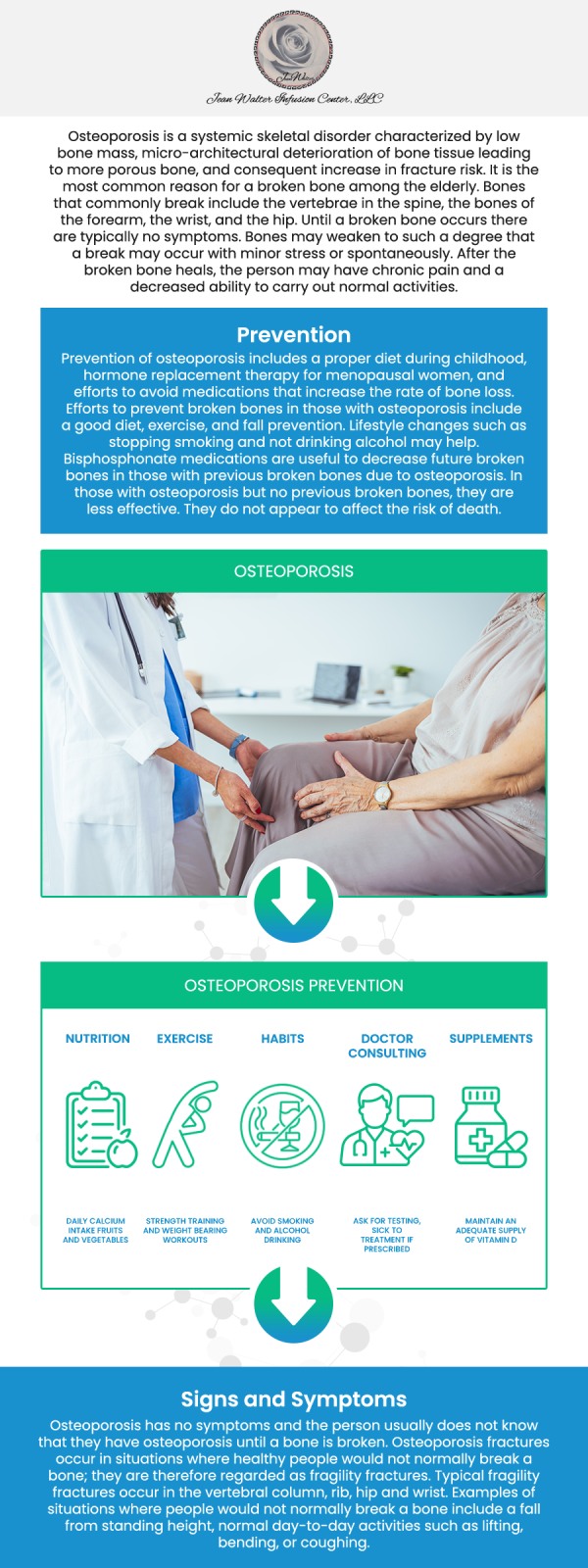
Table of Contents:
Is infusion therapy more effective at increasing bone density compared to taking daily or weekly oral medications?
Does infusion therapy ensure 100% absorption of the medication, guaranteeing that the bones receive the full benefit?
Is this method specifically recommended for patients with severe osteoporosis or those at high risk of immediate fractures?
Does choosing infusion therapy eliminate the risk of missing doses, providing peace of mind regarding long-term protection?
Why Infusion Therapy is Effective for Osteoporosis Treatment at Jean Walter Infusion Center with Dr. Nasser Nasseri, MD
For many patients, infusion therapy offers a significant clinical advantage over daily or weekly oral pills. While oral bisphosphonates are a common first line of defense, they often struggle with efficacy due to poor absorption in the digestive tract. Clinical studies have shown that intravenous (IV) therapies can lead to a more rapid and consistent increase in bone mineral density (BMD), particularly in the spine and hip. Because infusions deliver the medication directly into the bloodstream, they bypass the biological hurdles that often limit the effectiveness of pills, making them a superior choice for those who haven’t seen improvement with traditional methods.
One of the primary benefits of choosing infusion therapy at Jean Walter Infusion Center is the guarantee of 100% bioavailability. When a patient takes an oral medication for osteoporosis, only a tiny fraction—sometimes as little as 1% to 5%—is actually absorbed by the body. The rest is lost during digestion or can cause irritation to the esophagus and stomach. By utilizing IV delivery, Dr. Nasser Nasseri, MD ensures that the full dose of the medication reaches the bone tissue immediately. This “guaranteed delivery” means the bones receive the maximum possible benefit, allowing the medication to start the work of inhibiting bone-destroying cells without delay.
Yes, infusion therapy is frequently the gold standard for patients diagnosed with severe osteoporosis or those who have already suffered a fragility fracture. It is also highly recommended for individuals who:
• Have very low T-scores on their DEXA scans.
• Have gastrointestinal issues (like GERD or IBS) that make oral pills painful or difficult to digest.
• Have failed to show improvement on oral medications after a year of treatment.
By providing a more potent and direct dose, infusions can help stabilize the bone architecture more quickly, which is critical for patients at an immediate high risk of life-altering injuries.
Adherence is one of the biggest challenges in treating chronic bone loss. It is easy to forget a weekly pill or feel discouraged by the strict requirements of oral medications (such as staying upright for 30–60 minutes after dosing). Infusion therapy completely removes this burden. Depending on the specific medication, an infusion might only be required once every few months or even once a year. This “set it and forget it” approach provides immense peace of mind, as patients no longer have to worry about whether they are staying compliant with their treatment plan. The long-term protection is locked in during the visit to the clinic.
The decision to transition to infusion therapy is a significant step toward long-term skeletal health, and Dr. Nasser Nasseri, MD is uniquely qualified to lead that transition. At Jean Walter Infusion Center, the focus is on precision medicine. Dr. Nasseri evaluates each patient’s specific fracture risk and metabolic profile to select the most effective infusion agent—whether it be a potent bisphosphonate like zoledronic acid or a monoclonal antibody like denosumab. By administering these treatments in a specialized clinical setting, Dr. Nasseri can monitor patient progress closely, manage any potential side effects, and ensure that the therapy is working at its highest capacity to rebuild and protect bone mass.
The science behind infusion therapy lies in the “pharmacokinetics” of bone remodeling. When medication is delivered intravenously, it creates a “peak concentration” in the blood that allows it to bind more effectively to the mineral surfaces of the bone. This process essentially “shuts down” the overactive osteoclasts (cells that break down bone) much faster than the slow, incremental build-up of oral drugs. This rapid intervention is often the difference between maintaining a healthy, active lifestyle and suffering a debilitating break.
Infusion therapy represents a major leap forward in the management of osteoporosis, offering higher absorption, better compliance, and faster results for those in need. For residents of Rosedale and the surrounding areas, Dr. Nasser Nasseri, MD and the Jean Walter Infusion Center provide the expertise and advanced care necessary to tackle bone loss head-on. If you are concerned about your fracture risk or are tired of the side effects of oral medications, infusion therapy may be the solution you’ve been looking for. For more information, contact us today or book an appointment online now! We are conveniently located at 9114 Philadelphia Rd, Suite 208A, Rosedale, MD 21237. We serve patients from Rosedale MD, Parkville MD, Middle River MD, Rossville MD, Overlea MD, and surrounding areas.
Check Out Our 5 Star Reviews

Additional Services We Offer


- Infusion Therapy
- Injection Treatments
- Intravenous Immunoglobulin Therapy
- Medical Conditions
- Asthma
- Crohn’s Disease
- Fibromyalgia
- Gout
- Inflammatory Eye Disease
- Inflammatory Skin Disease
- Iron Deficiency
- Lupus
- Multiple Sclerosis
- Myositis
- Osteoporosis
- Rheumatoid Arthritis
- Ulcerative Colitis
- Vasculitis
- IVIG Infusions
- Platelet-Rich Plasma (PRP)


 Send Text
 How May I Help You?