

Prolia Injections for Bone Density Management in North Baltimore, MD
Prolia injections offer a targeted and effective approach to bone density management for patients facing osteoporosis and progressive bone loss. This treatment works by targeting specific proteins to slow bone breakdown, helping to preserve vital skeletal structure, increase overall density, and significantly reduce fracture risk. Dr. Nasser Nasseri, MD, at Jean Walter Infusion Center provides seamless routine administration, diligent bone health monitoring, and personalized support to keep your bones strong and resilient over time. For more information, contact us or book an appointment online. We are conveniently located at 3333 N. Calvert St, Suite 540A, Baltimore, MD 21218.
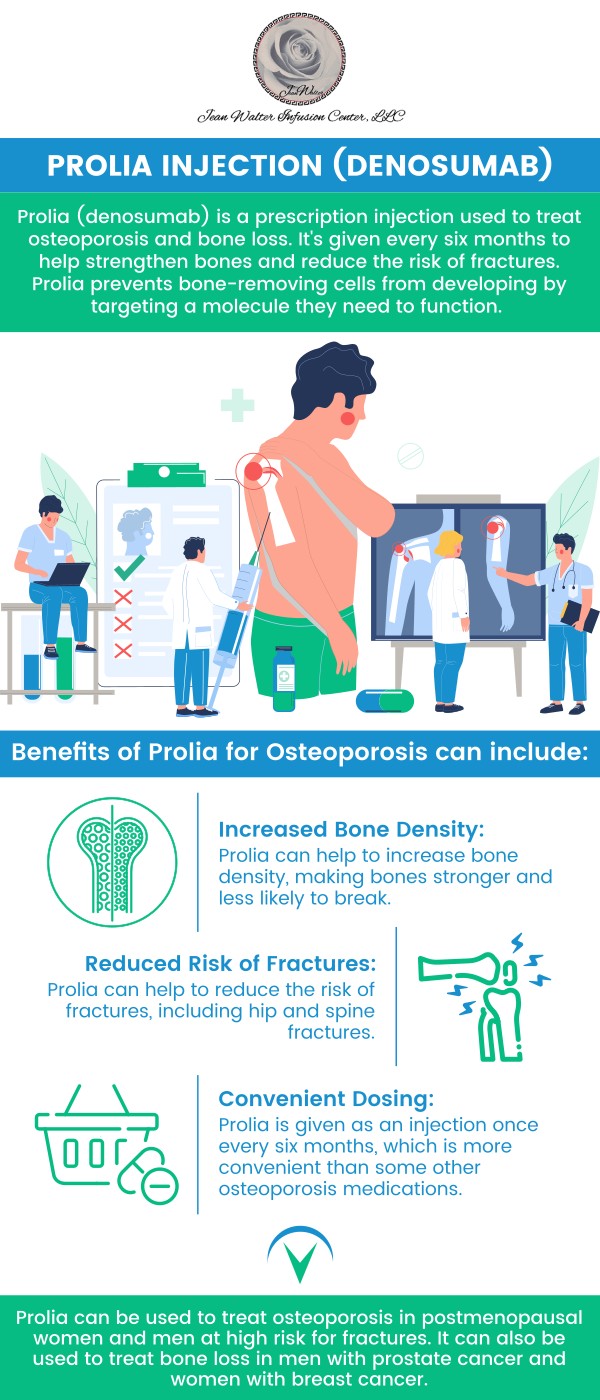
Table of Contents:
What role does Prolia play in increasing bone mass and reducing spinal and hip fracture risks?
What health conditions and medications should patients discuss with their doctor before starting Prolia?
Why is staying on schedule important during ongoing Prolia treatment?
What happens if a scheduled Prolia dose is delayed or missed?
How does Jean Walter Infusion Center support patients receiving Prolia for bone density management in North Baltimore, MD?
Prolia is a prescription medication designed for individuals at high risk for osteoporosis-related fractures, including postmenopausal women and men. It works by inhibiting a specific protein in the body, which is crucial for the formation and activity of osteoclasts, the cells responsible for breaking down bone. By blocking this protein, Prolia helps slow bone loss and increases bone strength.
Clinical research shows that Prolia can significantly improve bone mineral density (BMD), especially in the spine and hip—areas most prone to osteoporotic fractures. This improvement means a reduced likelihood of experiencing new vertebral (spinal) and hip fractures.
At Jean Walter Infusion Center, Prolia is administered as a simple subcutaneous injection once every six months. Our experienced clinical team ensures that each treatment is delivered safely and comfortably, with careful monitoring and support throughout your osteoporosis management journey.
If you are considering starting Prolia (denosumab) as part of your osteoporosis treatment, it is essential to have a thorough conversation with your Jean Walter Infusion Center healthcare team. This information ensures that Prolia is safe and appropriate for you.
What to Discuss with Your Jean Walter Infusion Center Provider:
• Calcium Levels: Please inform your care team if you have a history of low blood calcium (hypocalcemia). Prolia can further reduce calcium levels, so we may need to correct this before starting treatment.
• Kidney Health: If you have kidney problems, especially severe kidney impairment or failure, let us know. Prolia may increase the risk of low calcium in patients with kidney issues.
• Surgical and Digestive History: Tell us if you have had parathyroid or thyroid surgery, intestinal or stomach surgery, or conditions that affect calcium or vitamin D absorption (such as Crohn’s disease or celiac disease). These factors can impact how your body handles calcium and vitamin D, which is important during Prolia therapy.
• Allergies: Please mention any history of severe allergic reactions, as Prolia can, in rare cases, cause hypersensitivity.
• Dental Health: Before receiving Prolia, let us know if you have dental concerns, such as planned dental surgery, recent tooth extractions, or any issues with oral hygiene. Prolia has been associated with a rare but serious side effect called osteonecrosis of the jaw, so good dental health is important. We recommend scheduling a dental check-up before starting treatment if you have ongoing dental issues.
• Infections or Immune System Concerns: Share any history of frequent infections or immune system disorders (e.g., HIV, or use of immunosuppressive medications). Prolia can slightly increase the risk of infections like skin or urinary tract infections.
• Pregnancy and Breastfeeding: If you are pregnant, planning to become pregnant, or breastfeeding, please notify your provider. Prolia is not recommended during pregnancy or lactation due to potential risks to the baby.
• Current Medications: Bring a complete list of all prescription drugs, over-the-counter medications, vitamins, and supplements you are taking to your appointment. Pay special attention to medications that affect calcium levels (such as loop diuretics) or bone metabolism (such as bisphosphonates or corticosteroids). Calcium and vitamin D supplementation is usually recommended during Prolia treatment, and our team will advise you on the right dosing.
Why This Matters:
By sharing this important information with your healthcare team, you help us tailor your care and reduce the risk of side effects or complications. Our goal is to ensure that Prolia is used safely and effectively as part of your individualized osteoporosis treatment plan.
Prolia (denosumab) plays a vital role in protecting your bone health by inhibiting the process that leads to bone breakdown.
Prolia is administered as an injection every six months right here. Staying on schedule with these injections is essential—after about six months, the effectiveness of Prolia begins to diminish, and if a dose is missed or significantly delayed, your risk of bone loss and fractures increases.
Disruptions in your treatment schedule can lead to serious complications, particularly for individuals at high risk for fractures.
Your bone health is our priority. Adhering to your Prolia injection schedule at Jean Walter Infusion Center is the best way to maximize the medication’s benefits and reduce your risk of fractures.
Prolia (denosumab) is an important medication used to strengthen bones and reduce the risk of fractures, especially in individuals with osteoporosis. Prolia is typically administered as an injection once every six months.
What if You Miss or Delay a Prolia Dose?
If you miss or delay a scheduled dose of Prolia, it’s important to receive your injection as soon as possible. Delaying or missing a dose can reduce the effectiveness of the medication and increase your risk of bone loss and fractures.
If you realize you have missed your scheduled Prolia injection, please contact Jean Walter Infusion Center right away so we can help you reschedule your appointment. Do not attempt to administer Prolia yourself unless you have been specifically trained and instructed by your healthcare provider.
Rescheduling and Future Doses
When rescheduling, remember that your next Prolia injection should be planned for six months after your last dose. This helps maintain the most effective protection for your bones.
Do Not Stop Prolia Without Medical Advice
It is important not to stop receiving Prolia without speaking to your healthcare provider. Suddenly stopping or experiencing long delays between doses can cause rapid bone loss, and there have been reports of increased risk of spine fractures after discontinuing Prolia.
At Jean Walter Infusion Center in North Baltimore, MD, Dr. Nasser Nasseri, MD, and our experienced clinical team provide personalized care for patients receiving Prolia as part of their osteoporosis and bone density management plan. Dr. Nasseri focuses on ensuring that each patient’s treatment is carefully coordinated according to their medical history, current health needs, and prescribed bone health plan.
Before treatment, Dr. Nasseri and our team review relevant medical history, current medications, previous treatments, and other factors that may affect Prolia therapy. This individualized assessment helps our team identify important considerations before the injection and gives patients an opportunity to ask questions about their treatment.
During the appointment, our team explains what patients can expect from the Prolia injection, including how it is administered, potential side effects, and appropriate aftercare. Dr. Nasser Nasseri, MD, emphasizes clear communication and ongoing monitoring so patients understand the role of Prolia in their broader bone density management plan.
Ongoing care is also an important part of treatment. Our team can help coordinate appropriate follow-up, laboratory testing, and future appointments based on the patient’s treatment plan. Because Prolia is typically administered every six months, staying consistent with scheduled treatment and recommended monitoring is an important consideration for patients receiving ongoing therapy.
At Jean Walter Infusion Center, Dr. Nasseri and our team are committed to providing attentive, coordinated, and patient-centered Prolia care in North Baltimore, MD. From the initial assessment through ongoing monitoring, we strive to make each treatment visit comfortable and informative while supporting patients throughout their bone health management journey. For more information, contact us or book an appointment online. We are conveniently located at 3333 N. Calvert St, Suite 540A, Baltimore, MD 21218. We serve patients from North Baltimore MD, Dundalk MD, Halethrope MD, Ferndale MD, Yorktown MD, and surrounding areas.
Check Out Our 5 Star Reviews

Additional Services We Offer


- Infusion Therapy
- Injection Treatments
- Intravenous Immunoglobulin Therapy
- Medical Conditions
- Asthma
- Crohn’s Disease
- Fibromyalgia
- Gout
- Inflammatory Eye Disease
- Inflammatory Skin Disease
- Iron Deficiency
- Lupus
- Multiple Sclerosis
- Myositis
- Osteoporosis
- Rheumatoid Arthritis
- Ulcerative Colitis
- Vasculitis
- IVIG Infusions
- Platelet-Rich Plasma (PRP)


 Send Text
 How May I Help You?