

How to Spot the Early Warning Signs of Osteoporosis in Rosedale MD
Learn how to identify the early warning signs of osteoporosis in Rosedale, MD. Dr. Nasseri, MD, highlights symptoms such as bone fractures, back pain, and a stooped posture, helping you take early action to manage bone health and prevent further complications. For more information, contact us today or book an appointment online now! We are conveniently located at 9114 Philadelphia Rd, Suite 208A, Rosedale, MD 21237.
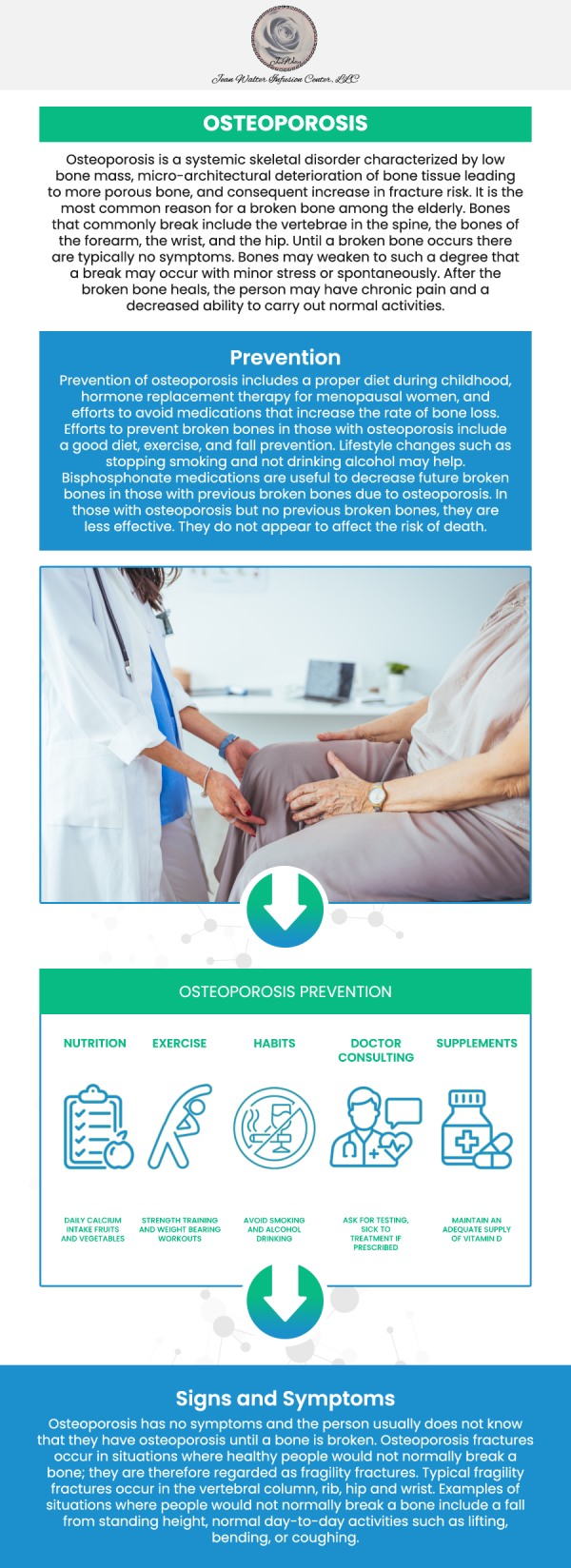
Table of Contents:
What are the most common early warning signs of osteoporosis?
Can a loss of height be a sign of bone loss?
Are brittle fingernails or dental issues linked to osteoporosis?
Why does osteoporosis sometimes cause shortness of breath?
How Can Jean Walter Infusion Center Strengthen Your Bone Health?
Osteoporosis is often called a “silent disease” because it develops slowly and typically shows no obvious symptoms in its early stages. At Jean Walter Infusion Center, we understand how important it is to recognize subtle warning signs that may suggest bone loss is occurring, so that you can receive expert care as early as possible.
One of the most common early indicators of osteoporosis is a decrease in height over time, which is usually caused by compression fractures in the spine. You might notice your posture becoming more stooped, or that your clothes fit differently — both can reflect subtle changes in your spine’s structure.
Another important warning sign is experiencing fractures from minor injuries or falls that would not normally cause a bone to break in a healthy person. These fractures—especially in the hip, wrist, or spine—can be a red flag for underlying bone weakness. Some individuals may also experience back pain due to a fractured or collapsed vertebra.
Less obvious signs can include receding gums, which may indicate bone loss in the jaw, and a weakened grip strength, which may be associated with lower bone density. Certain risk factors, such as age, family history, low body weight, or specific medical conditions and medications, can also increase your likelihood of developing osteoporosis.
If you notice any of these signs or have risk factors for osteoporosis, the team at Jean Walter Infusion Center can help. Our specialists offer comprehensive bone health assessments, including bone density testing for early detection. For those diagnosed with osteoporosis, we provide a range of advanced treatment options, including infusion therapies designed to strengthen bones and reduce the risk of future fractures.
Did you know that a gradual loss of height can be an early sign of bone loss, especially osteoporosis? As people get older, changes in the spine due to weakened bones may lead to a noticeable decrease in height. Osteoporosis—one of the most common causes—can cause the vertebrae in your spine to thin and compress, resulting in a loss of height over time.
This process often occurs “silently,” meaning that many people are unaware of bone loss until a fracture happens. That’s why it’s important to pay attention to signs such as unexplained height loss. If you or a loved one notices a reduction in height, especially of an inch or more, it’s a good idea to discuss this with your healthcare provider.
At Jean Walter Infusion Center, our experienced team can evaluate your bone health and, when appropriate, recommend a bone density test (DEXA scan) to check for osteoporosis or related conditions. If bone loss is detected, we offer advanced infusion therapies for osteoporosis and other bone health issues, helping to prevent fractures and maintain your mobility and quality of life.
Some early warning signs—such as brittle fingernails and dental issues—can sometimes suggest underlying bone health problems. While these symptoms are not definitive indicators of osteoporosis, they may signal the need for further evaluation:
• Brittle Fingernails: Fragile nails can result from many factors, including nutritional deficiencies and everyday wear and tear. Sometimes, brittle nails reflect low calcium or poor nutrition, which are also risk factors for osteoporosis. If you notice persistent changes in your nails, especially alongside other risk factors, it’s important to discuss this with your healthcare provider.
• Dental Problems: Issues such as receding gums and unexpected tooth loss have a stronger link to osteoporosis. The jawbone can lose density just like other bones, leading to loose teeth or changes in dental fit. Dentists may be the first to detect these changes and recommend further evaluation.
At Jean Walter Infusion Center, we offer comprehensive osteoporosis assessments, including bone density testing, and work closely with your care team to develop a personalized treatment plan. For some patients, this may include intravenous (IV) medications to help strengthen bones and reduce fracture risk.
If you are experiencing changes in your nails or dental health—especially if you have other risk factors like menopause, a family history of osteoporosis, or long-term steroid use—we encourage you to schedule a consultation. Our specialists can help determine if further testing or preventive treatments are appropriate to protect your bone health.
Osteoporosis is a condition characterized by decreased bone density and strength, making bones more fragile and prone to fractures. While it is widely recognized for increasing the risk of fractures—especially in the spine, hip, and wrist—osteoporosis can also sometimes lead to unexpected symptoms, such as shortness of breath.
At the Jean Walter Infusion Center, we understand the many ways osteoporosis can affect your overall health. One important reason osteoporosis may cause breathing issues is through vertebral compression fractures. These occur when the bones of the spine (vertebrae) become so weak that they collapse, sometimes even without any significant injury. When multiple vertebrae in the thoracic (chest) part of the spine are affected, this can cause a forward curvature of the upper back, known as kyphosis. This change in spinal shape can reduce the space available in the chest cavity, making it more difficult for the lungs to expand fully.
As a result, individuals with severe spinal changes from osteoporosis may experience shortness of breath, particularly during physical activity. The altered posture and loss of height associated with osteoporosis can further limit lung function and make deep breathing more difficult.
At Jean Walter Infusion Center, we offer advanced infusion therapies—including medications specifically designed to strengthen bones and reduce the risk of fractures. By treating the underlying bone loss, we aim to not only decrease the risk of fractures but also help prevent the secondary complications of osteoporosis, such as breathing difficulties due to spinal compression.
At Jean Walter Infusion Center, Dr. Nasser Nasseri and his dedicated team provide a personalized approach to managing osteoporosis for patients in Rosedale. Recognizing that each skeletal profile is unique, they offer advanced, FDA-approved infusion and injection therapies—including Prolia (denosumab), Reclast (zoledronic acid), and Evenity—to effectively slow bone loss and stimulate new bone formation. By combining state-of-the-art medical treatments with tailored lifestyle and nutritional guidance, the center empowers patients to regain their mobility and significantly reduce their risk of future fractures.
Visit Jean Walter Infusion Center today to learn more about our osteoporosis treatments and how we can support your bone health and overall well-being. For more information, contact us today or book an appointment online now! We are conveniently located at 9114 Philadelphia Rd, Suite 208A, Rosedale, MD 21237. We serve patients from Rosedale MD, Parkville MD, Middle River MD, Rossville MD, Overlea MD, and surrounding areas.
Check Out Our 5 Star Reviews

Additional Services We Offer


- Infusion Therapy
- Injection Treatments
- Intravenous Immunoglobulin Therapy
- Medical Conditions
- Asthma
- Crohn’s Disease
- Fibromyalgia
- Gout
- Inflammatory Eye Disease
- Inflammatory Skin Disease
- Iron Deficiency
- Lupus
- Multiple Sclerosis
- Myositis
- Osteoporosis
- Rheumatoid Arthritis
- Ulcerative Colitis
- Vasculitis
- IVIG Infusions
- Platelet-Rich Plasma (PRP)


 Send Text
 How May I Help You?